Destination Guide
Masai Mara: The Complete Guide
The Masai Mara is one of Africa’s most celebrated wildlife destinations — a vast landscape of open grasslands, river valleys and wildlife-rich plains in south-western Kenya. This guide, built on twenty-two years of guiding this ecosystem, explains what makes it special, when to visit, where to stay, and how to plan your safari properly.
At a Glance
The Masai Mara, in brief
For many travellers planning a Kenya safari, the Masai Mara is the destination they know before they know anything else about the country. Yet the Mara is more than a single park or one safari experience — the wider ecosystem includes the Maasai Mara National Reserve and its surrounding private conservancies, each offering different landscapes, wildlife access, accommodation and safari styles.
Masai Mara National Reserve is Kenya’s single most visited wildlife destination and one of the most consistently recommended safari destinations in Africa, known for exceptionally high wildlife density, resident Big Five populations, and the annual arrival of the Great
LOCATION
South-western Kenya, near the Tanzanian border
BEST KNOWN FOR
Wildlife, big cats, the Great Migration
KEY WILDLIFE
Lion, leopard, cheetah, elephant, buffalo, rhino
BEST FOR
First-time safari travellers, photographers, couples, families
RECOMMENDED STAY
3–5 nights
HOW TO EXPERIENCE IT
Private guided game drives, carefully chosen accommodation, conservancy time where suitab
Why Visit the Masai Mara
One of the most complete safari experiences in Africa
Few destinations combine such productive wildlife habitat with the variety of accommodation, guiding and safari options available in the Masai Mara. The attraction begins with the landscape: wide grasslands allow long views across the plains, while rivers, wooded areas and seasonal grazing grounds support a remarkable concentration of wildlife. This variety makes every game drive different.
The Mara is particularly renowned for large populations of lions, excellent chances of seeing leopard and cheetah, elephant and buffalo, plains game including zebra, giraffe and numerous antelope species, the seasonal movement of wildebeest during the Great Migration, the Mara River and its surrounding wildlife, a choice of National Reserve and private conservancy landscapes, and some of Kenya’s finest safari camps and lodges.
For a first safari in Kenya, the Masai Mara is often the strongest place to begin, because it delivers the classic wildlife experience many travellers imagine when planning an African safari. But the best Mara safari is not simply about seeing the greatest number of animals — it is about having enough time, the right guide, and the flexibility to observe wildlife properly.
Where Is the Masai Mara?
The wider Greater Mara ecosystem
The Masai Mara lies in south-western Kenya, close to the border with Tanzania, forming part of the larger Greater Mara ecosystem, connected ecologically with the Serengeti in northern Tanzania. The destination is commonly referred to simply as “the Masai Mara,” but the wider safari landscape includes the Maasai Mara National Reserve, private and community conservancies surrounding parts of the reserve, and wildlife corridors and community land forming part of the wider ecosystem.
This distinction matters when planning a safari, because the location of your camp affects your experience. A camp inside or close to the National Reserve offers particularly convenient access to the reserve’s famous wildlife areas. A camp in a conservancy offers a quieter atmosphere and, depending on the conservancy’s rules, activities not generally available within the reserve. Choosing where in the Masai Mara to stay should be based on your priorities, not simply the best-known camp name.
Masai Mara Wildlife
What lives in this ecosystem
The ecosystem supports an extraordinary diversity of animals, from large predators and elephants to smaller mammals, reptiles and hundreds of bird species.
Premier destination
Lions
The open grasslands and abundant prey create favourable conditions for lions, and experienced guides often know the territories and movements of resident prides. One advantage of spending several days in the Mara is observing behaviour rather than simply ticking lions off a list.
More elusive
Leopards
Leopards often favour riverine woodland, thicker vegetation and areas with mature trees. A skilled guide and patience make a significant difference when looking for them.
Open plains
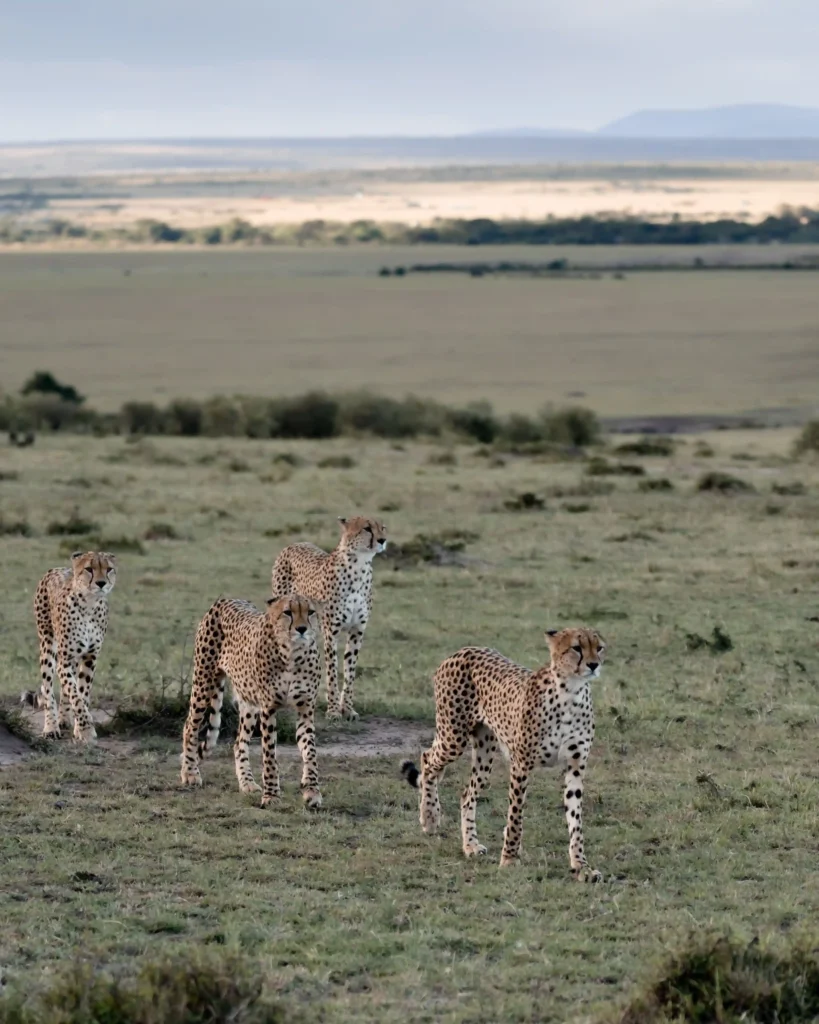
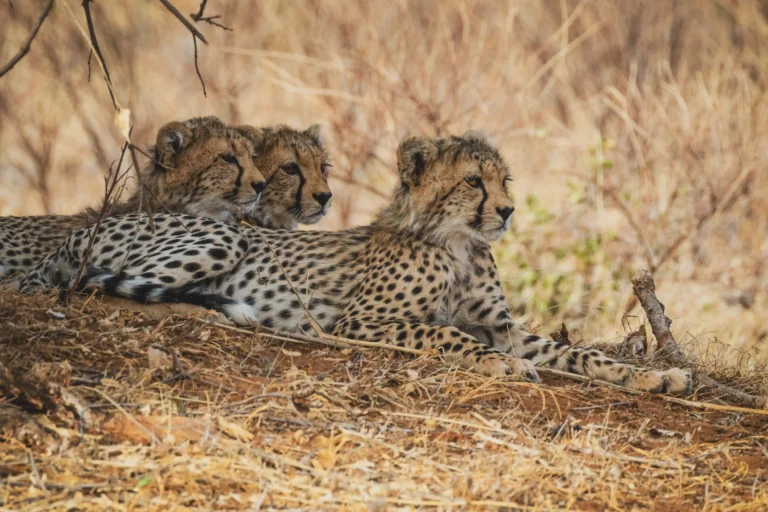
Cheetahs
Travellers may encounter cheetahs resting, scanning the grasslands or moving through open country. As with every predator sighting, the experience depends on timing, habitat and the movements of wild animals.
Family herds
Elephants & Buffalo
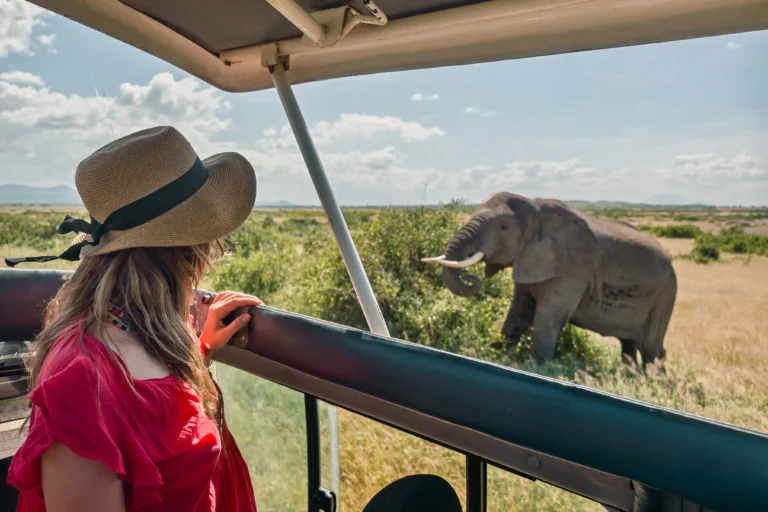
Elephants are found throughout the wider ecosystem, and seeing a family herd moving quietly through the landscape is one of the defining Mara experiences. African buffalo are regularly encountered alongside them.
Rarer sighting
Rhino
Rhino are more difficult to encounter than the other Big Five species, and sightings depend heavily on location and current wildlife movements. Travellers specifically focused on rhino may wish to combine the Mara with another Kenyan conservation destination known for stronger rhino-viewing opportunities, such as Laikipia.
Beyond the Big Five
Plains game & birdlife
Giraffe, zebra, wildebeest, hippopotamus, spotted hyena, jackal, warthog, topi, eland, impala, and both Grant’s and Thomson’s gazelle are all commonly encountered, alongside excellent birdwatching across the Mara’s varied habitats.
The Big Five in the Masai Mara
Excellent opportunities, not a guarantee
The Masai Mara supports lion, leopard, elephant and buffalo throughout the year. Black rhino is present in small numbers and sightings are infrequent. However, a good safari should never be presented as a guarantee that all five will be seen. Wildlife moves according to natural conditions — weather, prey, water, vegetation and animal behaviour all influence sightings. A professional safari focuses on creating the best possible opportunities rather than promising a checklist. For travellers whose priority is seeing all five species, we recommend discussing the full Kenya itinerary rather than relying on one destination alone.
The Great Migration in Masai Mara
One of the world's most remarkable wildlife movements
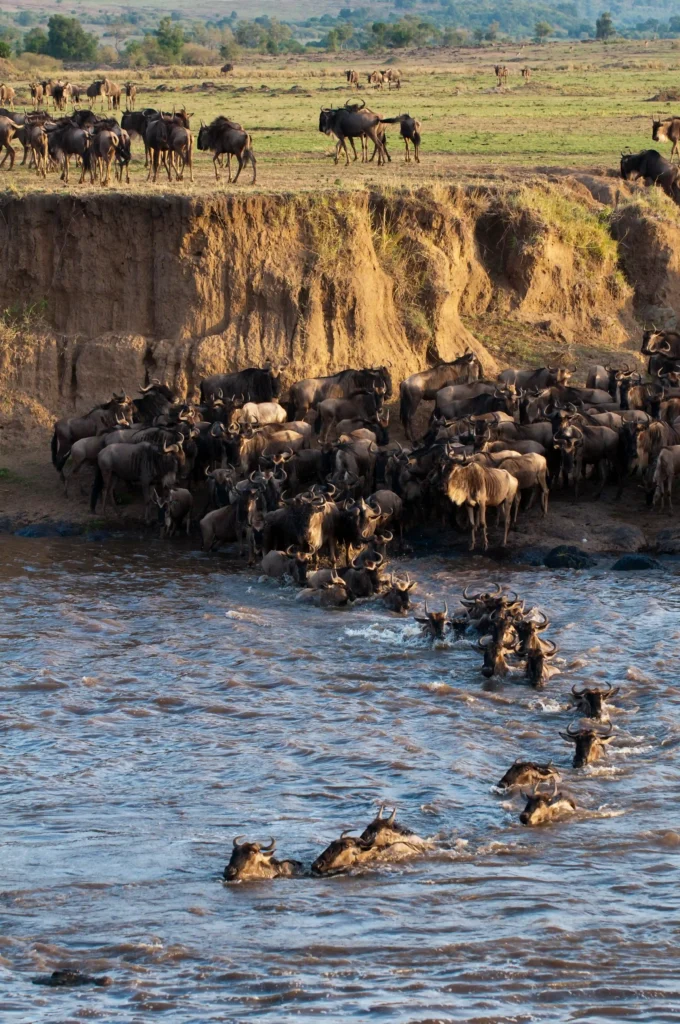
Each year, large herds of wildebeest, accompanied by zebra and other grazing animals, move through the greater Serengeti–Mara ecosystem in response to rainfall and changing grazing conditions. The Mara is generally associated with the migration during the middle and later part of the year, although exact timing changes from year to year — the Great Migration does not follow a fixed calendar. Rainfall and grazing conditions influence when and where the animals move, and no traveller should ever be promised a river crossing on a particular day.
During migration periods, visitors may experience large concentrations of wildebeest, zebra herds, predator activity, dramatic movement across open plains, and increased wildlife activity around the Mara River. River crossings are among the most famous migration scenes, but they are unpredictable — they may happen quickly, not happen while you are present, or occur in a different location from where you expect. A good migration safari therefore requires flexible guiding and a camp positioned to make the most of current wildlife conditions.
The National Reserve & Conservancies
Two very different safari experiences
Classic Mara
Maasai Mara National Reserve
The National Reserve contains some of the Mara’s best-known landscapes and wildlife areas, particularly attractive for travellers seeking expansive plains, major wildlife concentrations and access to areas associated with the Great Migration. It can be busy at popular sightings during peak periods, though the experience depends greatly on your guide, drive timing, and willingness to explore beyond the busiest areas.
Private & intimate
Masai Mara Conservancies
Conservancies are managed wildlife landscapes within the wider Greater Mara ecosystem, playing an important role in maintaining wildlife habitat and creating economic links between conservation and local communities. Depending on the specific conservancy, staying here may provide a more private safari atmosphere, smaller camps, lower vehicle density, night drives, and guided walking experiences — rules and conditions vary between conservancies.
Things to Do in masai mara
Beyond the game drive
A safari is not simply a series of game drives. The experiences available depend on where you stay, your interests, and the rules governing that area.
The foundation
Game Drives
Early mornings and late afternoons are traditionally the most productive times, though private safaris provide greater flexibility, including full-day drives when wildlife activity makes it worthwhile.
A different view
Hot-Air Balloon Safari
Flights generally begin around sunrise and provide an aerial perspective of the plains, rivers and wildlife below. Because flights depend on weather and operational conditions, availability should be confirmed in advance.
Deeper context
Maasai Cultural Experiences
The wider Mara is the homeland of Maasai communities, and cultural experiences can provide visitors with a deeper understanding of local traditions and the relationship between people, land and wildlife — done respectfully and arranged to benefit the communities involved.
On foot
Walking Experiences
Available in selected conservancy landscapes, walking is a very different experience from a game drive, with a focus on tracks, plants, insects, birds and understanding how the ecosystem works.
Serious light
Photography
Open landscapes, large wildlife populations and dramatic light create excellent opportunities. Serious photographers should consider a private vehicle and a guide who understands photographic positioning.
Where to Stay in Masai Mara.
One of the widest selections of safari accommodation in Kenya
Options range from exclusive private-use properties to intimate tented camps and larger safari lodges. The best place to stay depends on the type of safari you want. Luxury camps focus on privacy, comfort, service, guiding and exceptional wilderness locations — many of the best experiences involve smaller camps with relatively few guests, spacious tented suites, private vehicles or guiding, and genuine conservation and community connections. When comparing accommodation, do not choose based on the room alone: consider exact location, access to wildlife areas, camp size, guiding quality, vehicle arrangements, activities offered, family suitability, conservation model, and travel time to and from the airstrip.
How Many Nights in Masai Mara
How long to spend in the Masai Mara
We plan four nights in the Masai Mara as the standard first safari. Four nights give three full days of game drives. Three nights is the shortest stay we recommend and suits a short break; two nights leaves a single full day and is a gamble in peak season.
Minimum
3 Nights
Suitable for travellers with limited time — multiple game drives, a good introduction to the Mara, and time to explore different habitats.
Recommended
4 Nights
A stronger choice for most luxury travellers, giving more flexibility to spend longer with wildlife, explore different areas, add an experience such as a balloon flight, and avoid rushing between activities.
Ideal
5 Nights or More
Best when the Masai Mara is the main focus of your trip — particularly suited to photographers, wildlife enthusiasts, travellers visiting during migration periods, and repeat safari visitors.
Best Time to Visit Masai Mara
Matching your dates to your priorities
The Masai Mara can be visited throughout the year, but the experience changes with the seasons. Rather than choosing a month solely because it is described as “the best,” match your travel dates to what matters most to you: general wildlife viewing is strong across different times of year; travellers focused on the Great Migration should plan around the period when herds move into the Mara ecosystem, though exact timing varies; photographers should consider whether they want dramatic skies, green landscapes, dry grasslands, migration scenes or softer light; and travellers prioritising fewer visitors or better value should consider dates outside the busiest periods. The table shows best time to visit Masai Mara in summary
| Months | Conditions | Best For |
|---|---|---|
| January – February | Short dry spell, warm and clear | Resident wildlife, quieter camps |
| March – May | Long rains; lush, green landscape | Lowest rates, strong birdlife, fewer visitors |
| June | Rains easing, still green | Good value before peak season begins |
| July – October | Dry season; migration herds present | Great Migration river crossings, peak game viewing |
| November – December | Short rains, landscape greening again | Good resident wildlife viewing; December sees a rate increase |
Getting There
By air or by road
Most travellers reach the Mara by either light aircraft or road. Flying is generally the fastest and most comfortable option for a luxury safari — flights operate from Nairobi to airstrips serving different areas of the Mara, and after landing, your guide or camp team normally meets you for the transfer to camp, which can itself become your first game drive. When choosing a camp, check which airstrip it uses, flight duration, transfer time, baggage restrictions, and whether the transfer is shared or private. Road travel provides more flexibility for travellers who want to see Kenya’s landscapes along the way, though it takes longer and road conditions can vary — for short luxury itineraries, flying is often the better choice because it maximises time in the wilderness.
A Private Masai Mara Safari
Building the day around your interests
A private safari gives you greater control over how you experience the Mara. Instead of following a fixed schedule, you can build the day around your interests — particularly valuable if you are travelling as a couple, a family, a photographer, focused on birds or big cats, visiting for a special occasion, or combining several experiences. With a private vehicle, you have greater flexibility over when to leave camp, how long to stay at a sighting, and how your day is structured. The best private safari, however, is not simply a private vehicle — it is the combination of good planning, an experienced guide, the right camp, and enough time in the destination.
Families & Honeymooners
The right accommodation and
itinerary make the difference
FAMILIES
Choosing the right setup
Consider family tents or interconnected rooms, private vehicles, flexible meal times, children’s policies, age restrictions for certain activities, travel times and the pace of game drives. For younger children, a private vehicle can make a major difference because the schedule can be adapted around the family.
HONEYMOONERS & COUPLES
Privacy over spectacle
A honeymoon itinerary may include a small luxury camp, private game drives, bush breakfast or private dining, a balloon safari, sundowners, a private tent or suite, and a combination of the Mara and the Kenyan coast. We generally recommend prioritising privacy and guiding over simply choosing the largest or most famous lodge.
Combining the Masai Mara with Other Destinations
The Mara works extremely well
as part of a wider Kenya safari
Classic
Masai Mara + Amboseli
Predator-rich grasslands, large elephant herds, and views towards Mount Kilimanjaro.
Contrast
Masai Mara + Samburu
Two very different ecosystems — northern Kenya landscapes and distinctive wildlife before the classic grasslands of the Mara.
Conservation-focused
Masai Mara + Laikipia
Excellent for travellers seeking a more diverse and conservation-focused safari, with strong rhino tracking and walking safaris.
Bush & beach
Masai Mara + Diani
Elephants beneath Kilimanjaro, the Masai Mara’s big cats, then days on the Indian Ocean at Diani. The beach finish gives you rest after early-morning game drives.
Sample Masai Mara Safari Itineraries
A starting point, not a fixed package
4 Nights
5-Day Masai Mara Conservancy Safari
Nairobi → Masai Mara conservancy → Nairobi
Why choose this safari
Choose this when you want fewer vehicles at each sighting, with night drives and walking safaris where the conservancy permits.
Fewer vehicles · Night drives · Walking safaris
Conservancy and camp to be confirmed. Herds move in and out of the conservancies, July to October.
From $5,650
per person*
2 Nights
3-Day Masai Mara Safari
Nairobi → Masai Mara → Nairobi
Why choose this safari
Two nights, one camp, and a real safari: the Mara’s big cats on a weekend’s notice, with no camp changes to eat into the time.
Big cats · Open savannah · Short break
Best time: year-round; July to October adds the chance of the herds.
From $1,850
per person*

6 Nights
7-Day Great Migration Safari: Masai Mara
Nairobi → Masai Mara conservancy → Nairobi
Why choose this safari
Six nights at the river means several days of waiting for the crossing, not one anxious afternoon. Timing the herds is the whole plan.
River crossings · Full-day drives · Big cats
Best time: July to October, with peak herd presence in August and Septembe
From $4,200
per person*

6 Nights
7-Day Masai Mara Conservancy Photography Safari
Nairobi → Masai Mara → Nairobi
Why choose this safari
Your vehicle, your light. Stay with a lion until the shot is right, with no crowd pushing you on.
Flexible hours · Low-density viewing · Predator action
Best time: July to October for the added possibility of herds.
From $7,500
per person*
Choosing the Right Masai Mara Safari
Questions worth answering before you book
What wildlife is most important to you?
Big cats, elephants, migration, birds and general wildlife may influence where and when you travel.
Do you want to stay in the Reserve or a conservancy?
This affects activities, vehicle density, camp style and safari atmosphere.
Do you want to stay in the Reserve or a conservancy?
This affects activities, vehicle density, camp style and safari atmosphere.
Do you want a private vehicle?
For luxury, family and specialist safaris, this can be one of the most valuable choices you make.
How many nights do you have?
Avoid spending too much of a short itinerary transferring between destinations
What type of accommodation do you prefer?
Choose between intimate tented camps, private villas, luxury camps and larger lodges.
What is your budget?
Look at the total value of the safari rather than the room rate alone — flights, transfers, park or conservancy fees, private vehicles and included experiences all matter.
Our Expert Recommendation
“The Mara rewards patience. Give your guide time to follow wildlife rather than rushing from one famous sighting to another.”
After more than two decades of experience in Kenya’s safari industry, my strongest advice for a Masai Mara safari is simple: do not try to do too much in too little time. Spend enough nights in one carefully chosen location. Choose a camp because of its location and guiding, not only because its photographs look impressive. For most first-time luxury travellers, I recommend at least four nights. If privacy and flexibility matter to you, choose a private vehicle. If the Mara is the main purpose of your trip, consider combining the classic National Reserve experience with the quieter atmosphere of a suitable conservancy. And if the Great Migration is your priority, remain flexible — nature does not operate according to a brochure calendar. The best Masai Mara safari is not the one that promises the most sightings. It is the one that gives you enough time and the right conditions to experience the wilderness properly.
—James, Founding Guide, Kenya Private Safaris
Masai Mara Map
Locating the Masai Mara
The Masai Mara sits in Narok County, south-western Kenya, roughly 270 km from Nairobi by road, directly bordering Tanzania’s Serengeti National Park to the south.
Plan your Masai Mara safari
Tell us your travel dates, number of travellers, nights available, preferred accommodation style, budget range, and the wildlife and experiences that matter most to you. We’ll design a private Masai Mara safari around your interests and combine it with other destinations across Kenya.
Frequently Asked Questions
Masai Mara -common questions, answered directly
The Masai Mara is in south-western Kenya near the Tanzanian border, forming part of the wider Greater Mara ecosystem connected ecologically with the Serengeti.
It is famous for exceptional wildlife, large populations of predators, the Big Five, open savannah landscapes and the Great Migration.
Yes. It is one of Kenya's strongest safari destinations, particularly for travellers seeking a classic wildlife experience with excellent opportunities to see large mammals and predators.
Three nights is a useful minimum. Four to five nights provides a more relaxed and rewarding safari experience
The Mara is a year-round destination. The best time depends on whether your priority is general wildlife, the Great Migration, photography, fewer visitors or seasonal value.
The Mara is generally associated with migration activity during the middle and later part of the year, but timing changes annually according to rainfall and grazing conditions.
No. River crossings are natural and unpredictable events and should never be guaranteed on a particular date.
The Mara offers excellent opportunities to see several members of the Big Five. Rhino sightings can be more difficult, and no wildlife sighting can be guaranteed.
Yes. Both spellings are commonly used. "Maasai Mara" reflects the name associated with the Maasai people and is also used in official destination references, while "Masai Mara" remains a widely used search term.
The National Reserve is the best-known protected area within the Mara. Conservancies are managed wildlife landscapes in the wider ecosystem that may offer different activities, accommodation and levels of visitor density.
Neither is automatically better. The right choice depends on your priorities, travel dates, activities, camp and desired safari style.
Common wildlife includes lion, leopard, cheetah, elephant, buffalo, giraffe, zebra, wildebeest, hippo, hyena and many species of antelope and birds.
Yes. Private safaris can provide greater flexibility over game-drive times, routes and the amount of time spent at wildlife sightings.
You can travel by road or fly from Nairobi to an airstrip serving your chosen area of the Mara.
Flying is usually faster and can be more suitable for short luxury itineraries. Driving may appeal to travellers with more time or those who prefer a road journey.
Yes. Choose family-friendly accommodation, suitable room configurations and a private vehicle where possible.
Yes, although camp policies and recommended activity durations can vary. A private vehicle is often particularly useful for families.
Yes. The combination of intimate camps, wildlife, private experiences and optional bush-and-beach extensions makes it an excellent honeymoon destination.
Yes. Balloon safaris are available in the Mara, subject to weather and operational conditions.
Bring comfortable neutral clothing, layers for early mornings, sun protection, suitable shoes, a camera and any personal items you require. Your safari operator should provide a detailed packing guide based on your season and itinerary.
Cultural experiences can be arranged in appropriate locations. We recommend experiences that are respectful and provide meaningful benefits to the communities involved.
The best accommodation depends on your needs. Consider location, guiding, camp size, privacy, vehicle arrangements, activities and budget rather than choosing by reputation alone.
The cost depends on season, accommodation, number of travellers, length of stay, flights, park or conservancy fees, vehicle arrangements and included experiences. See our full Luxury Safari Kenya Cost Guide for a detailed breakdown.
Yes. Popular combinations include Amboseli, Samburu, Laikipia and Diani Beach.
Reputable camps and safari operators have established safety procedures. Visitors should follow guidance from their safari guide and camp staff, particularly around wildlife and after dark.