Private & Luxury Kenya Safaris Designed Around Your Vacation Time
Kenya Safari from USA
You've come a long way. Let's make the journey count.
A single trip from America can combine exceptional wildlife, luxury camps, private conservancies, cultural experiences and the Indian Ocean — but only if the itinerary is built to justify the distance, not just fill the days. That’s the entire premise of this page.
The Real Questions Americans Ask Before Booking
Not a marketing FAQ — the questions travelers actually have
How do I even get there from where I live?
Am I going to feel awful when I land?
How do I not waste my limited vacation days?
How many days do I actually need?
Is Kenya actually safe?
There are too many parks — how do I choose?
What about malaria and vaccines?
Do I need a visa, and how hard is it?
What's actually different from home?
What's this really going to cost?
Why Take a Kenya Safari from the USA?
One country, several genuinely different worlds
The honest answer to “why travel this far” isn’t a single attraction — it’s that Kenya lets you experience several distinctly different ecosystems and experiences inside one country, on one trip. World-class Big Five wildlife in the Masai Mara. The Great Migration, when timing allows. Elephants beneath Kilimanjaro in Amboseli. The rugged north of Samburu. Private conservancies in Laikipia built around exclusivity and conservation. Genuine cultural encounters with Maasai communities. And, if you extend the trip, the Indian Ocean coast. Few long-haul destinations pack this much genuine variety into a single itinerary.
Why Kenya Works Particularly Well for American Travellers
This is where the trip needs to be planned differently than it would from Europe
You’re traveling considerably farther than someone flying from London or Dubai — which means the itinerary has to justify the time away from work or school in a way a European traveler’s trip doesn’t. Two things follow from that: the trip needs real experience density, not days lost moving between destinations, and it’s often worth treating the whole thing as more than “just” a safari.
Honeymoons
A genuinely popular way to start a marriage with something neither of you will forget.
Anniversaries
Milestone years deserve a milestone trip.
Birthdays
A 40th, 50th or 60th that actually feels like an occasion.
Graduation
A genuinely memorable send-off before the next chapter starts.
Family Reunions
Getting scattered family members in one place, doing something none of them would plan alone.
Retirement
The trip that’s been “someday” for years, finally given a date.
How Do You Fly from the USA to Kenya?
"I don't even know what the route looks like from where I live."
Nairobi is the gateway — here's how you actually get there from a US city
This is usually the first practical question a British traveller asks, and rightly so — it shapes everything else about how the trip feels. The good news: getting from the UK to Kenya is genuinely one of the more straightforward long-haul journeys available to a British traveller, closer in ease to flying to the Gulf than to flying to Southern Africa or the Far East.
Kenya Airways
JFK (New York) → Nairobi (NBO), ~13h30m-15h, Boeing 787, roughly 7 flights weekly
Via Europe
British Airways (London), KLM (Amsterdam) — total journey typically 17-20 hours
Via the Gulf
Qatar Airways (Doha), Turkish Airlines (Istanbul), Ethiopian Airlines (Addis Ababa) — typically 18-22 hours
Depending on where you live, your journey will likely involve a domestic connection within the United States before continuing on to Nairobi — JFK is the only nonstop gateway, so most travelers outside the New York area connect through it or through a European hub.
Los Angeles
Chicago
Washington DC
Atlanta
Boston
San Francisco
Dallas
Miami
Houston
Seattle
Wherever you’re departing from, tell us your home airport and we’ll work out the fastest realistic path to Nairobi — that’s genuinely part of what we do before you ever book a flight, rather than assuming everyone flies from New York.
Am I Going to Feel Awful When I Land?
"I've heard the time difference wrecks the first few days."
Honestly, a little — here's exactly how we plan around it
Nairobi sits 7 to 8 hours ahead of US Eastern Time, further still from Central, Mountain and Pacific — a genuine time change we won’t pretend isn’t real.
Fly overnight, arrive into the morning
The JFK-Nairobi route is scheduled this way by design — your body gets a natural head start.
We build in a soft first day, deliberately
Never a 5am game drive straight off a long-haul flight.
It resolves in two to three days
Right as the safari itself is hitting its stride.
You've Come a Long Way. Don't Spend Your Vacation in Transit.
"I have limited PTO — I can't afford to lose days to logistics."
This is the single biggest differentiator in how we plan a US itinerary
American vacation time is genuinely scarcer than a European traveler’s — there’s no equivalent to a UK traveler’s standard annual leave allowance to fall back on, so every day of your itinerary needs to earn its place. We plan specifically to minimize unnecessary road transfers, backtracking, excessive camp changes, long connections, poorly timed domestic flights, and the kind of one-night stopovers that add a transfer without adding a real experience.
When we recommend Driving
Shorter, scenic routes where the journey itself adds something — not simply the cheaper option by default.
When we recommend FLYING
Longer distances, remote camps, or whenever a day spent on the road is a day not spent in the bush — the better trade for a traveler with limited time.
How Many Days Do You Need for a Kenya Safari from the USA?
"I don't know how much time to actually request off work."
Don't measure your safari by the number of parks — measure it by the quality of the experiences
| Length | What It Suits |
|---|---|
| 5-6 Days — Focused Safari | Limited vacation time; one destination, properly explored rather than rushed |
| 7 Days — Classic Kenya Safari | A strong first-safari length, two to three ecosystems |
| 8-10 Days — Deeper Kenya Experience | More destinations or longer stays at each |
| 10-14 Days — Safari + Beach | A complete Kenya holiday, wildlife and coast together |
| 14+ Days — Grand Kenya Journey | Northern Kenya, Laikipia, the Mara and the coast, without rushing any of it |
Kenya Safari Destinations
What will this destination add to my holiday?
Masai Mara
Best for: Big Five, predators, migration, first safari
Amboseli
Best for: elephants, Kilimanjaro, photography
Laikipia
Best for: private conservancies, conservation, exclusive experiences
Samburu
Best for: northern Kenya, distinctive wildlife, landscapes
Lake Nakuru
Best for: rhino and route connectivity
Tsavo
Best for: wilderness, elephants, expansive landscapes
Lake Naivasha
Best for: relaxed experiences such as boat rides, walking safari
Diani
Best for: post-safari relaxation
Which Kenya Safari Is Right for You?
"Every website has a different list of places and I don't know where to start."
A needs-based selector, not a ranking
If You Want...
Consider
First African safari
Masai Mara + Amboseli + Nakuru
Big Five
Mara-focused
Great Migration
Migration-season Mara safari
Elephants + Kilimanjaro
Amboseli
Family vacation
Amboseli + Mara
Photography
Amboseli + Mara, more time at key spots
Romance
Mara + private conservancy
Relaxation
Safari + Diani
Privacy
Private conservancy
Deeper Kenya
Samburu + Laikipia + Mara
Deeper Kenya
Samburu + Laikipia + Mara
Limited vacation time
Fly-in Safari
Two weeks to spend
Grand Kenya safari
Kenya Family Safaris from the USA
A family safari shouldn't be an adult safari with children added to it
American family travel takes many shapes — parents and children, multigenerational groups, grandparents, extended family, whole-family celebrations. We plan around children’s ages, family accommodation, private vehicles, meal requirements, travel time, domestic flights, genuinely educational wildlife experiences, a beach extension, and real downtime rather than a packed schedule.
Multigenerational Kenya Safaris
A genuinely different planning problem from a standard family trip
Grandparents, parents and teenagers or young children traveling together need private vehicles, accessible accommodation, shorter transfers, more comfortable routing, flexible game-drive timing, carefully chosen camps and real beach relaxation built in — not the same itinerary as a young couple, scaled up. This is one of our strongest commercial differentiators for American travelers specifically, given how common the multigenerational trip has become as a way to justify the distance for everyone at once.
Kenya Honeymoon & Milestone Safaris from the USA
Honeymoons, anniversaries, birthdays, retirement, graduations, engagements
These trips are built around privacy, romance, luxury and genuinely special experiences — bush and beach combined, private dining, exclusive-use accommodation where appropriate. The occasion shapes the itinerary, not the other way around.
Great Migration Safaris from the USA
We plan around the season — never around a promised sighting
The Great Migration is the continuous movement of over a million wildebeest and zebra through the Mara-Serengeti ecosystem, with the largest herds typically in the Masai Mara from July to October. Timing matters, private conservancies offer a different viewing experience than the reserve itself, and how long you stay genuinely affects your odds. We won’t tell you “come in September and you’ll see a river crossing.” What we will say: we plan around the migration season and maximize your realistic opportunities, while recognizing that wildlife movements cannot be guaranteed — often, a longer Mara stay serves you better than a shorter one chasing a specific event.
Best Time to Visit Kenya from the USA
Built around your objective, not just the weather
Period
Conditions
January-February
Wildlife-focused travel, dry conditions
March-May
Green season, different safari conditions, good value
June-October
Migration-season Mara safari
November-December
Short rains and festive-season travel
Best for first safari
June-October, or January-February for fewer crowds
Best for Great Migration
July-October, Masai Mara
Best for families
Matched to your specific school calendar (see below)
Best for photography
June-October, clear skies
Best for honeymoons
Year-round, avoiding peak July-August crowds
Best value luxury
April-May, or November
US Travel Window
Planning Note
Spring Break
A genuinely strong window for family travel
Memorial Day
A long weekend that, paired with a few extra days of leave, opens up a real trip
Summer Vacation
The most popular US family travel period — book well ahead
Thanksgiving
An underused, genuinely strong international travel window
Christmas & New Year
Popular for family and luxury travel — high demand, book early
American school calendars vary considerably by state and district, so families should plan around their own school calendar rather than a generic date range.
Kenya Safari During Summer Vacation
June through September is the single most popular American travel window for Kenya, overlapping directly with peak dry-season wildlife viewing and, later in the period, the Great Migration. It’s also when camp availability and flight demand are at their tightest — booking 9-12 months ahead for a July or August family trip is genuinely worth doing, not just a sales line.
Safety & Security in Kenya
"I keep seeing news about instability in Africa and I don't know how to think about it."
An honest answer, structured plainly rather than a blanket reassurance
Before Travel
Check current US State Department travel guidance for Kenya specifically — not a general “Africa” search.
During Safari
Follow your guide’s instructions; this is standard practice everywhere, not a Kenya-specific caution.
Transport
Use professional, vetted operators for every transfer, not an ad-hoc arrangement.
Wildlife
Follow park and guide rules around animals at all times — this protects you and the wildlife.
Remote areas
Understand that safari locations can have limited connectivity, which is a practical fact, not a safety issue on its own.
Insurance
Comprehensive travel insurance covering your actual itinerary and activities is genuinely recommended, not an upsell.
Health Before Traveling to Kenya
"I don't know what shots I need or whether malaria pills are a big deal."
Real precautions, discussed with a professional — not a generic checklist
A pre-travel consultation with a travel-health provider should cover vaccinations, malaria prevention appropriate to your itinerary, any personal medication needs, travel insurance with medical evacuation coverage, food and water precautions, and sun and heat considerations. We deliberately avoid giving blanket medical advice here — your specific health circumstances and itinerary genuinely change the right answer, and that call belongs to a qualified professional, not a website.
Kenya Entry Requirements for American Travelers
An eTA, applied for online, before you leave home
Since January 2024, US citizens need an approved Electronic Travel Authorisation (eTA) — visa-on-arrival was discontinued, which likely explains the conflicting information you’ve seen. Apply online at current published fees sit around USD 30-51 for a single-entry eTA (confirm the exact current fee on the official portal), with processing typically 3-5 business days.
Requirement
Detail
Entry authorization
Kenya eTA, applied for online in advance
Passport Validity
At least six months from your travel date, with blank pages
Travel itinerary & accommodation info
Required as part of the eTA application
Yellow fever certificate
Required where applicable — check current requirements based on your routing
Entry requirements can change — always verify against official Kenyan government information before finalizing travel.
What American Travellers Should Know Before Their Safari
"What's actually different from home that nobody tells you upfront?"
The practical, honest differences — the section that makes this feel like an experienced operator talking, not a website
Time
Things move at a different pace — build in patience, not just an itinerary.
Roads
Safari roads can be genuinely rough in places; it’s part of the terrain, not a flaw in planning.
Early Mornings
Wildlife viewing often starts before dawn — the best sightings reward it.
Currency
Kenyan shillings for local purchases; major camps accept cards, with USD often useful for tips and incidentals.
Electricity
Kenya uses 240V power and UK-style Type G sockets — bring a plug adapter, and confirm non-dual-voltage devices are compatible.
Service
Safari hospitality is personal and locally rooted — warmer and more individual than a typical US hotel, in a way most travelers find is one of the best surprises of the trip.
Connectivity
Some camps have limited internet or mobile service — expect it, and it becomes part of the appeal.
Wildlife
Animals are genuinely unpredictable — that’s what makes a real sighting mean something.
Tipping
A real part of safari culture, with norms that vary by camp and role — we’ll walk you through what’s typical for your specific itinerary.
What Makes a Luxury Safari From USA Different?
Luxury isn't five-star room + expensive price
Luxury can mean a private vehicle, a private guide, an exceptional location, a genuinely small camp, an exclusive-use villa, flexible game drives instead of a fixed schedule, longer stays instead of one-night stopovers, real conservation access, private dining, seamless transfers and a thoughtfully paced itinerary. Our philosophy: luxury is having the freedom to experience Kenya your way, not simply paying more for the same fixed experience everyone else gets.
Why Private Conservancies Matter
A different model from the traditional national park
National parks are traditional, publicly managed protected wildlife areas. Private conservancies can offer additional experiences depending on the specific location and property — potentially including smaller-scale camps, fewer vehicles in some areas, walking safaris, night drives where permitted, genuine conservation experiences, and community programmes, all contributing to a more intimate safari atmosphere. We’re careful not to make blanket claims about every conservancy, since the rules and character genuinely differ property to property.
Safari + Beach from the USA
From the savannah to the Indian Ocean
For a long-haul traveler, this combination works particularly well — you’ve already made the journey, so extending it into a genuine two-part holiday makes far more sense than a single-purpose trip. A typical route: Nairobi → Amboseli → Masai Mara → Diani, or Nairobi → Samburu → Masai Mara → Diani. The progression is simple: adventure, then wildlife, then relaxation.
Fly-In Kenya Safaris From USA
For travelers with limited vacation time, this is often the better trade
Flying between selected safari regions can eliminate long road journeys entirely — light-aircraft connections serve the Mara, Samburu, Amboseli and Laikipia, with baggage typically limited to soft-sided bags around 15kg per person (exact limits vary by aircraft and operator, and we confirm this for your specific itinerary). Flying isn’t always necessary — for shorter, closer routes, driving can be the better and more scenic option — but for a US traveler with limited days, it’s frequently the single best way to protect your time in the bush rather than on the road.
How We Design a Luxury Kenya Safari from USA
Eight steps, and none of them start with a fixed package
1
Tell Us Your Dates
Including how much vacation time you actually have to work with.
2
Tell Us Who Is Traveling
Ages, relationships, special occasions, previous safari experience.
3
Tell Us What Matters
Wildlife priorities, privacy, pace, budget, must-see experiences.
4
Determine the Ideal Route
The most sensible sequence of destinations, avoiding unnecessary backtracking.
5
Select Camps
Matched to location, privacy, family suitability and your actual budget.
6
Decide Where to Fly
Protecting your limited vacation days from unnecessary road time.
7
Balance Safari and Relaxation
Building in real downtime, not a packed checklist.
8
Finalize Your Itinerary
A complete, itemized proposal, refined until it’s genuinely right.
Why Book With a Kenya-Based Safari Specialist?
"Why not just use my usual US travel agent, or a big booking platform?"
You have a travel advisor at home. We are your Kenya team on the ground.
A Kenya-based specialist brings local knowledge, real ground operations, genuine camp relationships, real-time operational support and tailor-made planning that a US-based agent working from brochures simply can’t match firsthand — not because a US advisor isn’t capable, but because we’re the ones actually managing the routing, the guides, the transfers and the on-the-ground problem-solving while you’re there.
An itemized contract before any deposit
Exactly what you’re paying for, in writing, before money changes hands.
Clear cancellation and refund terms
Stated plainly upfront, not buried in fine print.
A genuine Nairobi-based team
Real operators on the ground, not a reseller relaying secondhand information.
Direct communication throughout
A named contact you can reach before, during and after your trip.
How Much Does a Kenya Safari from the USA Cost?
"Every site shows a different 'starting from' price and I don't trust any of them."
Real ranges, itemized, in the currency you already budget in
Cost depends on season, number of travelers, number of nights, camp category, private vehicle, domestic flights, conservancy fees, park fees, activities and any beach extension. Kenya’s safari industry prices in US dollars as standard, so there’s no exchange-rate guesswork on your end.
Trip
Indicative Cost (per person)
Flights, JFK-Nairobi return (economy)
$1,400-$2,600
10-day safari (3 destinations)
$8,600-$13,800
12-day safari + coast (4 destinations)
$14,600-$21,800
16-day safari + coast (5 destinations)
$23,000-$35,200
What is Included
Accommodation, meals per the itinerary, a private safari vehicle, professional guide, game drives, airport transfers, domestic flights where specified, park and conservancy fees where applicable, and selected activities. International flights are typically arranged separately. Every proposal states inclusions and exclusions plainly — that clarity is what builds trust before you commit.
Kenya Safari Packages from the USA
Four starting points — each fully customizable from here
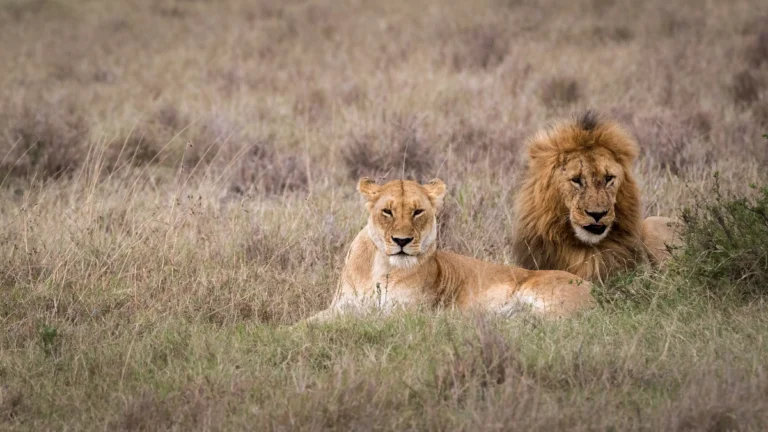
6 Nights
7-Day Kenya Classics Safari
Nairobi → Amboseli → Lake Nakuru → Masai Mara → Nairobi
Why choose this safari
Elephants beneath Kilimanjaro, rhino at Nakuru and the Mara’s big cats. A full safari week that makes the long flight worth it.
Elephants · Rhino · Big cats
Best for travellers from the USA: a first Kenya safari on a tight leave allowance.
From $4,150
per person*
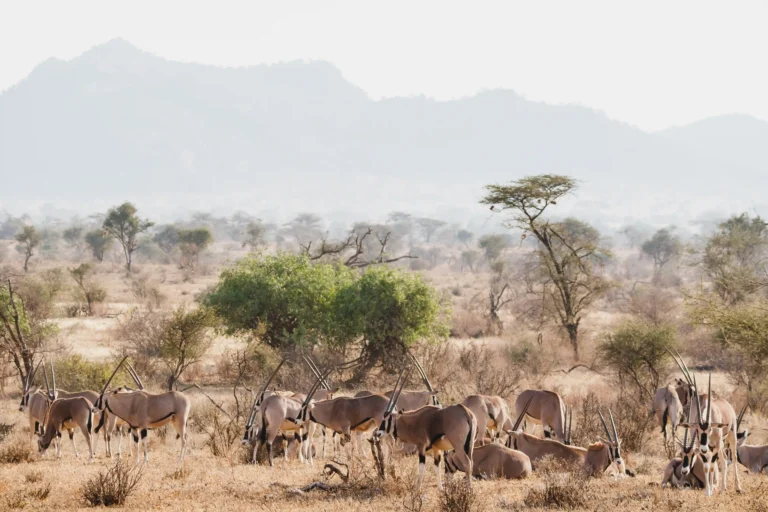
9 Nights
10-Day Grand Kenya Fly-In Safari
Nairobi → Samburu → Amboseli → Masai Mara → Nairobi
Why choose this safari
Three different Kenyas in ten days: Samburu’s rare northern species, Amboseli’s elephants and the Mara’s big cats, with flights doing the distance. Internal flights between safari regions, with some connections via Wilson Airport.
Northern species · Elephants · Big cats
Best for travellers from the USA: a once-in-a-lifetime trip that covers more than one landscape.
From $8,000
per person*

11 Nights
12-Day Kenya Grand Safari & Beach
Nairobi → Samburu → Masai Mara → Amboseli → Diani
Why choose this safari
Three safari regions, then a long finish on the Indian Ocean. The long-haul trip that recovers you before the flight home. Internal flights between safari regions, with some connections via Wilson Airport.
Northern species · Big cats · Diani Beach
Best for travellers from the USA: honeymoons, anniversaries and milestone trips.
From $9,500
per person*
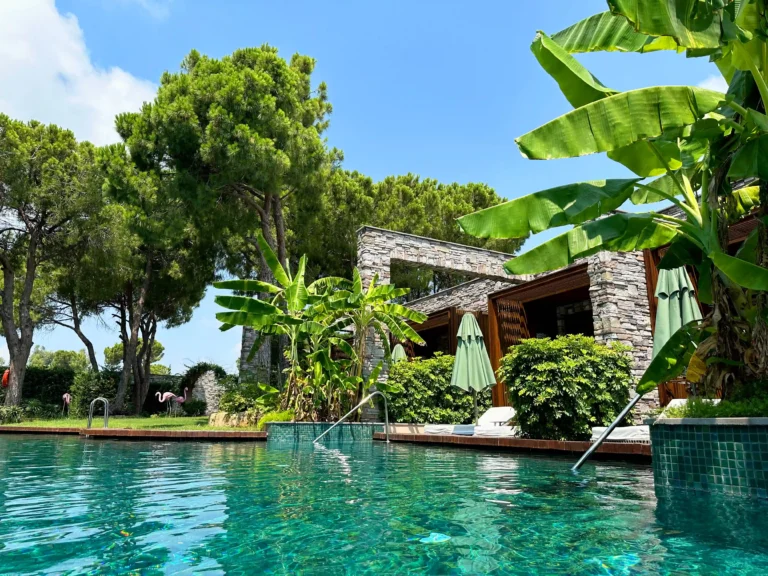
11 Nights
12-Day Family Villa Safari
Nairobi → Laikipia → Masai Mara → Amboseli → Nairobi
Why choose this safari
Your own house, vehicle and guide at every stop. No other guests, no shared dinner table, and a timetable only your family sets.
Private houses · Rhino conservation · Kilimanjaro views
Best for travellers from the USA: multi-generational family trips and reunions.
Price: On Application
Based on per house
You've Come a Long Way. Let's Make the Journey Count.
Tell us when you’re traveling, who’s coming, and what you want from Kenya
We’ll design a private safari around your vacation time, interests and preferred style of travel — an itemized proposal within 48 hours.
Frequently Asked Questions
Kenya safari from the USA
common questions, answered directly
The nonstop Kenya Airways flight from JFK to Nairobi takes roughly 13.5 to 15 hours; connecting routes from other US cities typically run 17-22 hours total.
Yes, Kenya Airways operates the only nonstop US-Kenya service, from JFK.
Nairobi is 7-8 hours ahead of US Eastern Time; most travelers adjust within two to three days, especially with a lighter first day built into the itinerary.
A minimum of 10 days is generally recommended given the length of the journey; 12-14 days is the most commonly booked length for US travelers.
Yes, Spring Break is a genuinely strong window for family travel to Kenya.
Yes, and it's an underused, strong international travel window worth considering.
Yes, light-aircraft connections serve the Mara, Samburu, Amboseli and Laikipia, saving significant time over road transfers.
Yes, with itineraries built around children's ages, private vehicles and appropriate pacing rather than a standard adult route.
Yes, though camp age policies vary by property; family-specific itineraries can be designed around your children's ages.
Yes, multigenerational safaris are designed with accessible accommodation, shorter transfers and a more comfortable pace.
Yes, safari-and-beach is one of the most popular ways to structure a longer Kenya trip, typically finishing at Diani.
A 10-day luxury safari typically runs $8,600-$13,800 per person, excluding international flights.
US citizens need an approved eTA before travelling, applied for online in advance; visa-on-arrival is no longer available.
Yes, since January 2024 this applies to all foreign visitors, including US citizens, with fees currently around USD 30-51.
Major safari destinations see millions of visitors annually with a strong safety record; checking current State Department advisories before travel is worthwhile.
June to October offers the driest conditions and the Great Migration; January-February and the shoulder months offer strong alternatives with fewer crowds.
Neutral-colored layered clothing, a plug adapter (Kenya uses 240V, Type G sockets), sun protection, and comfortable closed shoes — a specific list is provided per itinerary.
Yes. Major camps and hotels generally accept international cards; Kenyan shillings suit smaller local purchases.
USD is often useful for tips and incidentals, alongside local shillings for everyday purchases.
Tipping is a genuine part of safari culture with norms that vary by camp and role; specific guidance is provided for your itinerary ahead of travel.
Yes, every safari we arrange includes a private vehicle and dedicated guide as standard.
This is possible depending on your itinerary and time available; ask us directly if this is something you're considering.
Yes, every itinerary is built from your dates, interests, budget and group, not selected from a fixed package.