Luxury Kenya Fly-In Safaris
Fly-In Kenya Safari
Spend more time experiencing Kenya. Spend less time travelling between camps.
Fly when it improves the journey. Drive when the journey itself is part of the experience.
What Is a Kenya Fly-In Safari?
Kenya safari by air, moving between destinations in minutes rather than hours
A fly-in safari uses Kenya’s network of small bush airstrips and light aircraft to connect safari destinations directly, replacing long, often rough road transfers with short scheduled or chartered flights. Rather than driving five or six hours between Nairobi and the Masai Mara, or spending an entire day moving from the Mara to Samburu, you fly — landing on a dirt or gravel airstrip a short drive from your camp, with far more of your holiday spent in the wilderness and far less of it spent in a vehicle on tarmac and dirt roads. It’s the standard way experienced travellers move around Kenya’s safari circuit, and for multi-destination itineraries in particular, it’s very often the better way to travel.
Is a Fly-In Safari Worth It?
A direct answer to the commercial question, not just a case for flying
Paying more to fly only makes sense if it buys you something you’ll actually value. Here’s how we think about it, honestly, before recommending it to any traveller.
A Fly-In Safari Tends to Make Sense When...
You have limited time; you’re visiting several distant ecosystems; you’re travelling as a couple or family and value comfort; you’re staying at remote luxury camps; you’re combining safari with the coast; you want to maximise time in the wilderness; road transfers would consume substantial safari time.
Driving May Make More Sense When...
The route is relatively short; the road journey is genuinely scenic; you’re visiting Naivasha or other nearby destinations; you enjoy overland travel; you’re on a longer itinerary with time to spare; the road itself contributes something to the experience.
We don’t recommend flying because it sounds more luxurious. We recommend it when it creates a meaningfully better safari.
Why Choose a Kenya Flying Safari
The maths is straightforward once you see it laid out
A road transfer that consumes half a working day becomes a scenic 45-minute flight. Multiply that across a multi-destination itinerary — Nairobi to the Mara, the Mara to Samburu, Samburu back to Nairobi — and a fly-in safari can return two or three entire days to your holiday that would otherwise have been spent on the road. Those are days you can spend on an extra game drive, a slower morning, or simply longer at the destinations that matter most to you.
| Route | By Road | By Air |
|---|---|---|
| Nairobi → Masai Mara | 5-6 hours | ~45 minutes |
| Nairobi → Amboseli | ~4 hours | 30-45 minutes |
| Nairobi → Samburu | 5-6 hours | ~1 hour |
| Nairobi → Lewa / Nanyuki | 3-4 hours | 35-45 minutes |
| Masai Mara → Samburu (direct or via Nairobi) | Not practical by road in a day | 1-1.5 hours |
| Nairobi → Diani | 8+ hours | ~1 hour |
Where Can You Fly on a Kenya Safari?
Reachable by air from Nairobi, and increasingly from each other directly
Before the aviation detail, here’s the traveller’s actual question answered plainly — which of Kenya’s safari destinations can genuinely be reached by scheduled or chartered flight.
Masai Mara
Kenya’s most connected safari destination by air, with multiple airstrips serving different parts of the ecosystem
Samburu
Northern Kenya’s wildlife and landscapes, roughly an hour from Nairobi by air
Amboseli
Elephants and Kilimanjaro views, a short 30-45 minute flight
Laikipia
Private conservancies served via Nanyuki or dedicated conservancy strips such as Loisaba
Chyulu Hills
An increasingly prominent, exclusive fly-in destination between Amboseli and Tsavo
Diani/Coast
The Indian Ocean, roughly an hour from Nairobi and reachable directly from the Mara in peak season
Nairobi's Airstrips — Where Your Fly-In Safari Begins
Wilson Airport, not Jomo Kenyatta International
Almost every Kenya fly-in safari begins at Wilson Airport (IATA: WIL), a few kilometres from Nairobi’s city centre and entirely separate from Jomo Kenyatta International Airport (JKIA), where your international flight lands. Wilson is Kenya’s dedicated domestic and charter aviation hub — the base for Safarilink, Airkenya and the country’s main private charter operators, and the starting point for almost every scheduled or chartered safari flight in the country. If your international flight arrives into JKIA, we build a transfer to Wilson directly into your itinerary, so this connection is never something you have to manage yourself.
Masai Mara Airstrips
The Mara ecosystem has well over a dozen airstrips — the right one matters
This is one of the most overlooked details in planning a fly-in Masai Mara safari: airstrips across the Mara reserve and its surrounding conservancies can be more than an hour apart by road from each other. Landing at the wrong strip for your camp can undo much of the time a flight was meant to save. We confirm the correct airstrip for your specific camp before booking, every time.
Musiara Airstrip
Serves camps in the northern Mara and Mara North Conservancy area
Keekorok Airstrip
Serves camps and lodges in the central and southern Reserve
Olkiombo Airstrip
A central Reserve strip, convenient for several Mara camps
Kichwa Tembo Airstrip
Serves camps on the western side of the Mara ecosystem
Mara Serena Airstrip
Serves the central Reserve, near the Mara River
Ol Kimyei/ Naboisho Strips
Serves the central Reserve, near the Mara River
Other Fly in Kenya Safari Airstrips
Every major destination on this site has its own dedicated stri
Amboseli Airstrip
Inside Amboseli National Park, close to most camps
Samburu & Buffalo Springs Airstrips
Serve camps across the Samburu ecosystem, including Kalama Conservancy
Lewa Airstrip
Serves Lewa Wildlife Conservancy properties directly
Loisaba Airstrip
Serves Loisaba Conservancy camps in Laikipia
Nanyuki Airport
A wider Laikipia gateway, near Mount Kenya
Ukunda / Diani Airstrip
The coastal gateway for a safari-and-beach itinerary
Chyulu Hills Airstrip
Serves the exclusive camps of the Chyulu Hills, between Amboseli and Tsavo
Mtito Andei & Tsavo Airstrips
Serve camps across Tsavo’s expansive wilderness
The Airstrip Matters More Than Most Travellers Realise
Camp → correct airstrip → transfer time → game-drive opportunity
A destination name on an itinerary tells you almost nothing about which airstrip you’ll actually land at, or how far that strip is from your camp. This is exactly the kind of detail that gets glossed over on a generic itinerary and matters enormously on the ground — we verify it property by property rather than assume it.
| Destination | Typical Airstrip | Why It Matters |
|---|---|---|
| Masai Mara | Depends entirely on camp location — Musiara, Keekorok, Olkiombo, Kichwa Tembo, Mara Serena, or a conservancy-specific strip | The Mara ecosystem is large; the wrong strip can mean an hour or more of extra road transfer |
| Samburu | Samburu or Buffalo Springs, depending on which conservancy your camp sits in | Conservancy boundaries determine which strip is genuinely closest |
| Chyulu Hills | Chyulu Hills Airstrip, shared by the camps in the area | A single strip serves the whole area, simplifying this particular decision |
| Amboseli | Amboseli Airstrip, inside the National Park | Most camps sit within a short transfer of this single strip |
Scheduled Airline Routing — Airkenya & Safarilink
Two established operators run the backbone of Kenya's fly-in safari network
Both airlines operate from Wilson Airport using turboprop aircraft built for short bush-airstrip runways, flying scheduled multi-stop circuits that link Nairobi with Kenya’s main safari destinations — and, on several routes, connect the destinations to each other directly without returning to Nairobi first.
Scheduled Safari Airline
Safarilink
Based at Wilson Airport, Safarilink operates one of the widest scheduled domestic networks in the country, flying Cessna Caravan and De Havilland Dash 8 aircraft to destinations including the Masai Mara, Amboseli, Samburu, Nanyuki, Lewa Downs, Loisaba, Chyulu Hills, Naivasha, Tsavo West, Diani and Lamu, with regional connections to Kilimanjaro and Zanzibar. Its network is built around Wilson as a connecting hub, which makes a fly-in Masai Mara and Samburu safari genuinely straightforward to route without unnecessary backtracking.
Scheduled Safari Airline
Air Kenya
Also operating from Wilson Airport, Airkenya runs scheduled services to destinations including Amboseli, the Masai Mara, Samburu, Ol Pejeta, Lewa, Loisaba, Tsavo and Meru, connecting many of these destinations to each other directly as well as to Nairobi. For itineraries not covered by its scheduled timetable, Airkenya’s charter department arranges tailor-made routings.
Both airlines publish daily or near-daily departures on their core routes and allow multi-sector routing on a single ticket. That said, routes, frequencies and operating days genuinely change by season — rather than publish a fixed timetable here that would inevitably go out of date, we confirm the current schedule directly with the airline when we design your itinerary. For the very latest published routes, Safarilink and Airkenya’s own sites are the definitive source.
Private Charter Flights
For travellers who want their own aircraft, their own schedule, and no shared stops
A private charter removes the scheduled airlines’ multi-stop routing and fixed departure times entirely — you decide the airstrip, the time, and the route, with no other passengers or intermediate landings. This is particularly valuable for larger families, groups celebrating an occasion, tight connections, or routes that scheduled services simply don’t fly directly. Several well-established operators run this side of Kenya’s aviation industry.
Private Charter Operator
Z. Boskovic Air Charters
One of Kenya’s longest-established charter operators, founded in 1964 and based at Wilson Airport, offering private charter flights across safari, freight and corporate travel throughout East Africa.
Private Charter Operator
Yellow Wings Air Services
A Wilson Airport-based charter airline operating Cessna Caravans into more than 500 airfields across East Africa, offering safari, scenic, photographic and corporate charter flights — and operating as a carbon-neutral airline.
Private Charter Operator
Tropic Air Kenya
Based north of Nairobi, Tropic Air runs both fixed-wing Cessna aircraft and AS 350 helicopters, with more than two decades of experience flying private charters and heli-safaris across Kenya and into neighbouring countries — a genuine option for a scenic or helicopter-based safari transfer, not just a fixed-wing one.
Scheduled Flights or Private Charter?
Both are genuine fly-in safari options — the right one depends on your group and your route
| Scheduled (Safarilink / Airkenya) | Private Charter | |
|---|---|---|
| Cost | Priced per seat, generally lower for small groups | Priced per aircraft, often comparable or better value for 4+ travellers |
| Schedule | Fixed departure times, published routes | Your own timing, your own route |
| Stops | May include intermediate stops on multi-leg routes | Direct, point to point |
| Flexibility | Limited once booked | Fully flexible to your itinerary |
| Best for | Individuals, couples, standard routes | Families, groups, tight connections, non-standard routing |
Scheduled Flights Are Best When...
You’re on a standard, well-served route; travelling as a couple or small group; your itinerary is predictable and set well in advance; keeping air costs lower matters.
Private Charter Is Best When...
Your routing is unusual or not directly served; you’re a larger family or group; your itinerary is genuinely time-sensitive; you want a fully private aircraft; your destination airstrip needs a dedicated stop; you need to link multiple stops in one day.
Private charter isn’t automatically better — it’s a different tool for a different kind of routing, and we recommend it only when it genuinely suits your itinerary.
Expert Safari Routing — How We Decide When You Should Fly
We don't default to flying every route — the decision is made per journey, not as a blanket policy
Route Type
Our Usual Recommendation
Nairobi to Masai Mara
Fly — 45 minutes versus a genuinely long road day
Nairobi to Amboseli
Either — a strong scenic road route, or a short flight if time is tight
Nairobi to Samburu
Fly — the road transfer consumes most of a travel day
Nairobi to Lake Naivasha
Drive — short, scenic, and part of the experience
Mara to Samburu or Amboseli
Fly — impractical to drive directly in a single day
Chyulu Hills to Masai Mara
Fly — the two sit on opposite sides of the country's safari circuit
Within the same conservancy or reserve
Drive — always, this is what your safari vehicle and guide are for
We don’t choose accommodation simply because it has five stars. We choose it because it fits the couple, and it fits the safari.
When We Recommend Driving Instead
Flying is not always the better choice, and we say so plainly
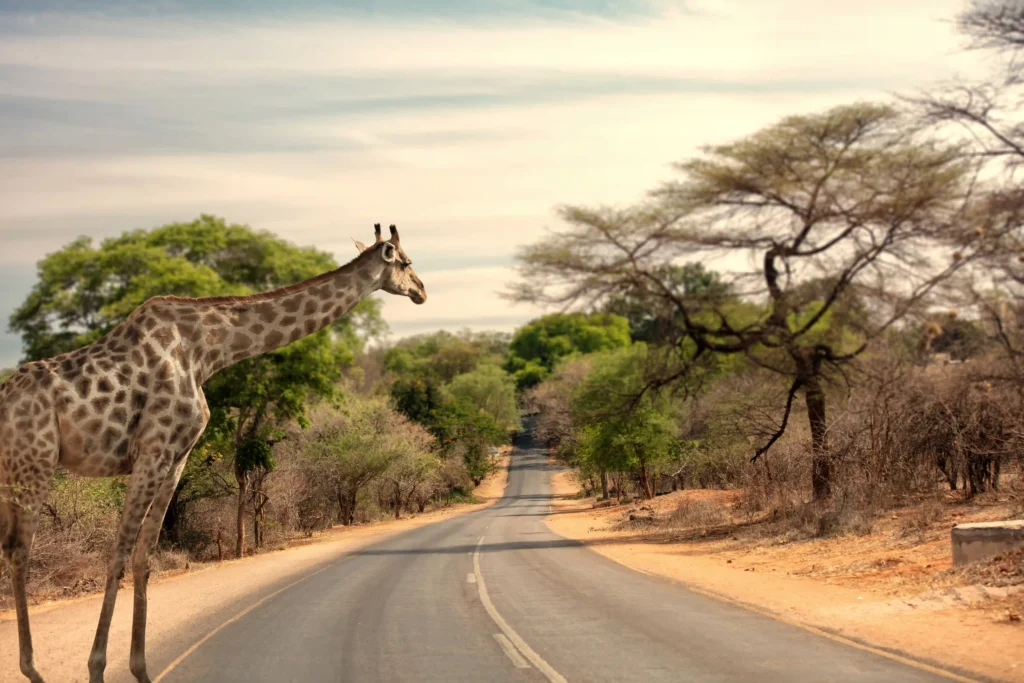
Some routes are short enough, and scenic or culturally interesting enough, that driving adds real value rather than simply consuming time — a road transfer past Great Rift Valley viewpoints, through farmland and small towns, or along a route with genuine wildlife-spotting potential along the way. We recommend flying when it protects your time in the places that matter most. We recommend driving when the journey itself is worth taking. That distinction, made honestly on a route-by-route basis, is the actual job here — not selling you a flight for its own sake.
Popular Kenya Fly-In Safari Routes
Real routes, drawn from itineraries we build every season
Nairobi → Masai Mara
Best for: a short, high-efficiency luxury safari.
Nairobi → Samburu → Masai Mara
Best for: northern Kenya’s landscapes combined with the classic Mara.
Nairobi → Amboseli → Masai Mara
Best for: elephants and Kilimanjaro, then the Mara.
Nairobi → Chyulu Hills → Masai Mara
Best for: exclusive wilderness paired with classic safari.
Nairobi → Masai Mara → Diani
Best for: safari followed by the Indian Ocean.
Nairobi → Samburu → Laikipia → Masai Mara
Best for: a deeper, more immersive northern Kenya journey.
What Happens After You Land at a Safari Airstrip?
Your safari doesn't stop when the aircraft lands
A camp vehicle or your private safari vehicle meets you directly at the airstrip, luggage is handled by the camp team, and — depending on timing — your first game drive can begin immediately on the transfer to camp rather than after you’ve checked in.
If your flight includes an intermediate stop at another airstrip en route, you generally remain on board while other passengers disembark or board — your guide or camp representative is always waiting at your specific stop, briefed on your flight and its timing in advance. On the return leg to Wilson, the same private transfer arranged on arrival is mirrored to get you back to your onward international flight, with realistic connection buffers built in.
Which of Our Safaris Can Be Done as a Fly-In Safari?
Fly-in is a way of travelling, not a separate product line — here's how it applies across our core itineraries
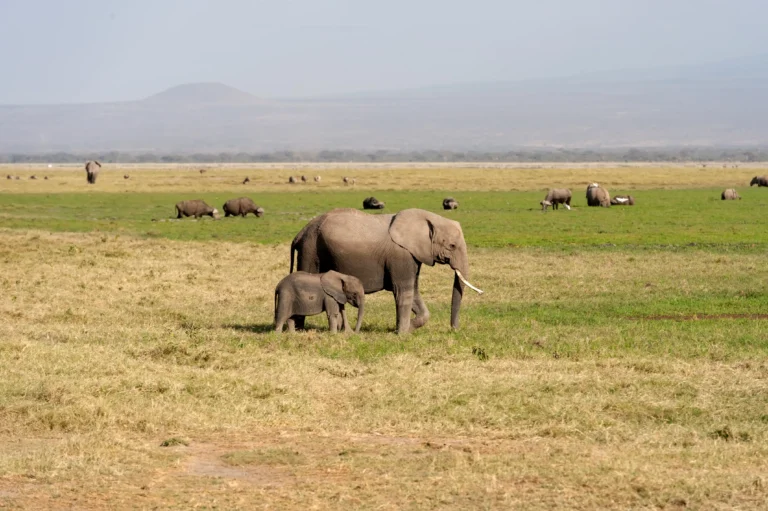
4 Nights
5-Day Amboseli & Masai Mara Fly-In Safari
Nairobi → Amboseli → Masai Mara → Nairobi
Why choose this safari
Choose this when you have under a week and want two of Kenya’s best-known parks without long road transfers.
Elephants · Kilimanjaro views · Big cats
Internal flights between safari regions, with some connections via Wilson Airport. Soft bags only: light-aircraft luggage limits apply.
From $2,800
per person*
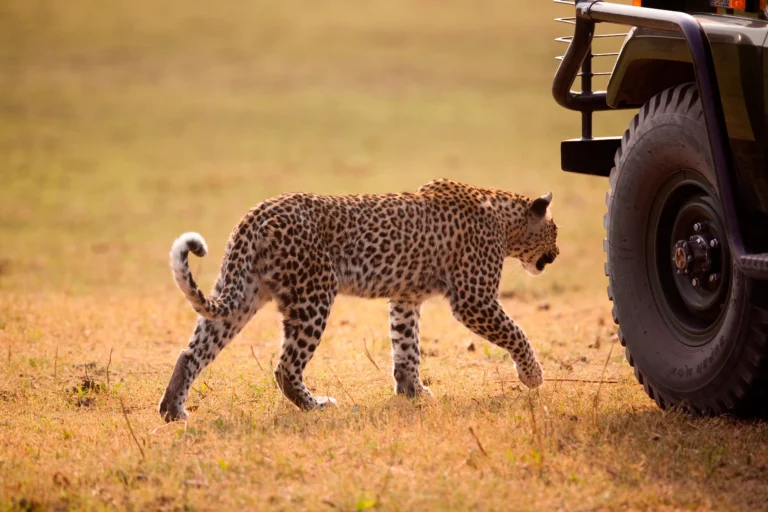
5 Nights
6-Day Samburu & Masai Mara Fly-In Safari
Nairobi → Samburu → Masai Mara → Nairobi
Why choose this safari
Choose this when you want two contrasting landscapes: Samburu’s dry north and its species found nowhere in the Mara, then the southern plains.
Northern species · Big cats · Two landscapes
Samburu to the Mara is a long drive; the flights replace it. Soft bags only: light-aircraft luggage limits apply.
From $4,000
per person*
6 Nights
7-Day Chyulu Hills & Masai Mara Fly-In Safari
Nairobi → Chyulu Hills → Masai Mara → Nairobi
Why choose this safari
Choose this when you want two different Kenyas in one trip: the Chyulu Hills’ rolling wilderness first, then classic Mara game drives.
Wilderness · Activity-led · Big cats
Activities depend on the property chosen. Soft bags only: light-aircraft luggage limits apply.
From $6,500
per person*
6 Nights
7-Day Samburu & Lewa Conservancy Safari
Nairobi → Samburu → Lewa → Nairobi
Why choose this safari
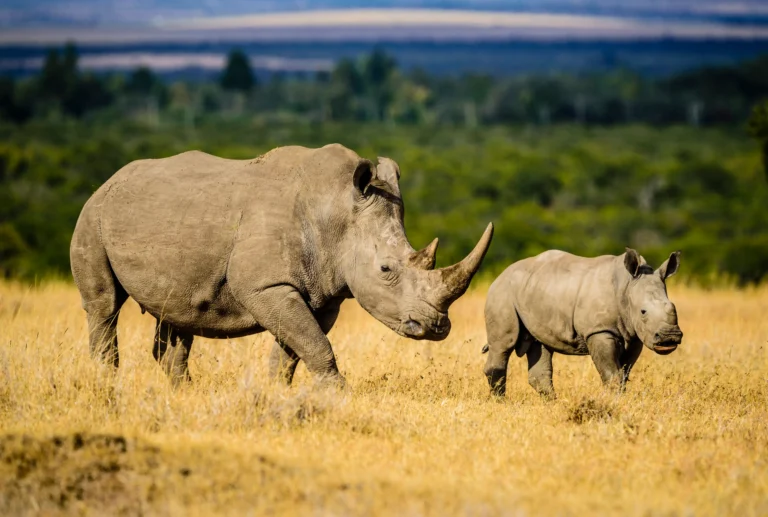
Why Choose ItChoose this when you want northern Kenya without the Mara: Samburu’s dry-country wildlife, then Lewa’s conservation work and rhino.
Northern species · Rhino · Conservancy
Suited to repeat visitors who have seen the Mara. Soft bags only: light-aircraft luggage limits apply.
From $5,500
per person*
9 Nights
10-Day Grand Kenya Fly-In Safari
Nairobi → Samburu → Amboseli → Masai Mara → Nairobi
Why choose this safari
Choose this when you want Kenya’s three signature landscapes in one journey, with the flying doing the distance.
Northern species · Elephants · Big cats
Three regions, three flights. Soft bags only: light-aircraft luggage limits apply.
From $8,000
per person*

9 Nights
10-Day Samburu, Laikipia & Masai Mara Safari
Nairobi → Samburu → Laikipia → Masai Mara → Nairobi
Why choose this safari
Choose this when you want more than game drives: Laikipia adds walking and horseback where the property permits, between Samburu and the Mara.
Northern species · Bush walks · Big cats
Activity availability and age limits vary by property. Soft bags only: light-aircraft luggage limits apply.
From $7,500
per person*
Baggage & Practicalities
Safari flight baggage limits are significantly lower than international airline allowances
A 15kg soft-sided baggage limit is common on Kenya safari flights, but the exact allowance depends on the airline, the aircraft and the specific route — Safarilink, for instance, applies some exceptions on certain coastal and international-linked routes. We confirm the applicable allowance for your specific itinerary before travel, rather than quote a single figure that may not apply to your route.
Soft-Sided Bags Only
Hard-shell suitcases generally don’t fit the luggage holds of small bush aircraft.
Weight Limits
Around 15kg per person is typical, sometimes less on smaller charter aircraft — confirmed exactly for your route before you travel.
Check-In Timing
Scheduled flights from Wilson generally require check-in 30-45 minutes before departure.
Storage for Extra Luggage
Camps and our Nairobi office can store excess luggage for the duration of your safari if needed.
Weather & Scheduling
Light aircraft schedules can shift with weather; we build appropriate buffer time into connecting itineraries.
What Should You Pack for a Fly-In Safari?
One Soft-Sided Bag
Rather than a rigid suitcase, per person.
Lightweight Clothing
Layered pieces pack down smaller than bulky items.
Camera Equipment
Generally fine as hand luggage — confirm any specific restrictions with us in advance.
Essential Toiletries & Medication
Kept in your carry bag rather than checked luggage.
What to Leave Behind
Hard-shell cases and anything not essential to your safari days — stored safely in Nairobi instead.
Seamless Ground Handling
The flight is one part of the journey — everything around it matters just as much
Airport meet-and-greet, transfers between JKIA and Wilson, camp transfers from each airstrip, luggage handling, and a genuine point of contact if a flight time shifts — this is the ground handling layer that makes a fly-in safari feel effortless rather than like a series of separate bookings you have to manage yourself. It’s arranged as one coordinated plan, not left for you to piece together flight by flight.
Why Fly-In Travel Works So Well for Luxury Safaris
Luxury isn't just the camp — it's how effortlessly the whole journey comes together
Fewer long road transfers, easier access to the most remote and exclusive camps, more actual time at the property you’ve chosen, seamless private transfers at every stage, and simply less fatigue by the time you reach your room. A luxury Kenya fly-in safari isn’t defined by the aircraft — it’s defined by everything the flight quietly removes from your day.
Luxury is not simply where you sleep. It is how effortlessly the entire journey comes together.
Fly-In Chyulu Hills
An exclusive, air-access-only destination between Amboseli and Tsavo
The Chyulu Hills — rolling volcanic grassland made famous partly through Hemingway’s writing — sit between Amboseli and Tsavo, with Kilimanjaro often visible on the horizon. Genuinely remote and lightly visited, the area’s small number of luxury camps depend on fly-in access via a dedicated airstrip, walking safaris, and real conservation partnerships with the Maasai landowners who manage the surrounding land. Paired with the Masai Mara, it makes for one of our most distinctive luxury fly-in itineraries — wilderness and privacy first, classic safari wildlife second.
Are Fly-In Safaris Good for Families?
Often, yes — and for a specific, practical reason
Less time on rough roads matters enormously with children and grandparents in the group, and multi-destination journeys that would otherwise mean a full exhausting day of driving become a short, genuinely exciting flight instead — many children find the small-aircraft experience itself part of the adventure. The trade-off is luggage planning, since fly-in limits are considerably tighter than most families pack for; we help plan around this in advance rather than let it be a surprise at check-in. For larger families, a private charter can also remove the scheduling constraints of shared flights entirely.
Fly-In Safaris for Honeymooners
A honeymoon shouldn't be spent watching the clock on long road transfers
Privacy, comfort, and fewer disruptive transfers — flying between the Mara, Chyulu Hills, Samburu or on to Diani lets a honeymoon itinerary keep its slower, more romantic pacing intact, rather than losing entire days to the road between destinations.
Fly-In Safari & Beach Holidays
Wildlife, then the Indian Ocean — connected entirely by air
Masai Mara → Diani
Our most-booked fly-in safari-and-beach combination.
Masai Mara → Watamu
A quieter, more laid-back stretch of coast north of Mombasa.
Samburu → Diani
Northern wilderness paired with classic coastal relaxation.
Chyulu Hills → Diani
Exclusive wilderness followed by an equally private stretch of coast.
How We Design Your Fly-In Kenya Safari
We don't sell flights. We design better safari journeys.
1
Understand Your Destinations
Where you want to go, and why each one matters to you.
2
Map the Realistic Routing
Which legs genuinely benefit from flying, and which don’t.
3
Confirm the Correct Airstrips
Matched precisely to your chosen camps, not just the nearest destination name.
4
Choose Scheduled or Charter
Based on your group size, timing needs and budget.
5
Determine Road vs Fly-In
Protecting your time without unnecessary long transfers.
6
Build in Sensible Buffers
So a weather delay doesn’t unravel your whole itinerary.
7
Arrange All Ground Handling
Every transfer, every connection, coordinated as one plan.
8
Deliver a Complete Itinerary
Flights, camps and transfers, all in a single itemised proposal.
Cost of a Fly-In Safari
What actually shapes the price of flying between destinations
Number of Sectors
Each flight leg is priced individually on scheduled airlines.
Scheduled vs Charter
Charter is priced per aircraft, which can favour larger groups.
Route Distance
Longer sectors, such as Mara to Samburu, cost more than short hops.
Season
Peak-season demand can affect both fares and seat availability.
Group Size
Changes the maths between scheduled seats and a private charter significantly.
Time Saved
Weighed against road-transfer costs and, more importantly, against the value of the days returned to your safari.
What Am I Actually Paying For?
A fly-in safari normally costs more than covering the same route entirely by road, because you’re paying for time, comfort and access — the additional cost can buy back time saved, genuine access to remote camps that road transfers make impractical, real comfort for older travellers or young children, fewer disruptive road transfers, and more actual hours spent on safari rather than in transit. The honest question isn’t whether flying is more expensive. It’s whether that additional cost gives you a meaningfully better safari.
When the Extra Cost May Not Make Sense
A short, genuinely scenic road transfer; a single-destination safari with nowhere else to fly to; a traveller who specifically enjoys overland travel; or a budget-sensitive trip where the time saved doesn’t justify the fare. We’ll tell you directly when we think driving is the better call — our advice here is independent of which option costs more.
Spend More Time Experiencing Kenya
Tell us your destinations and dates — we'll design the routing around your safari
Scheduled or charter, flying or driving, or a considered mix of both — we’ll build the itinerary that gets you the most time in the wilderness, not just the shortest flight time.
Frequently Asked Questions
Kenya fly-in safari — common questions, answered directly
A safari that uses light aircraft between Nairobi and safari destinations, or between destinations directly, instead of long road transfers.
Safarilink and Airkenya operate the main scheduled networks, both based at Wilson Airport in Nairobi.
Wilson Airport (WIL), separate from Jomo Kenyatta International Airport where international flights land.
Usually, when time is genuinely valuable — for limited holiday time, distant multi-destination itineraries, remote luxury camps, or safari-and-beach combinations. For short, close or scenic routes, driving can be the better choice.
For travellers with limited time, flying is usually the more time-efficient option because the flight (around 45 minutes) is substantially shorter than the 5-6 hour road transfer. Travellers who value an overland journey, or who are incorporating destinations like Naivasha along the way, may prefer driving instead.
Yes, this route is a genuine highlight of a fly-in Masai Mara and Samburu safari, typically 1-1.5 hours by air, and impractical to drive directly in a single day.
The correct airstrip depends on your specific camp or conservancy. The Mara ecosystem has well over a dozen airstrips spread across a large area, some more than an hour apart by road from each other, so choosing the correct one for your camp can significantly reduce your post-landing transfer.
Yes, Chyulu Hills is served by scheduled flights on Safarilink's network via its own dedicated airstrip, and pairs naturally with a Masai Mara fly-in itinerary.
Yes, several established operators including Z. Boskovic Air Charters, Yellow Wings Air Services and Tropic Air Kenya offer private charter flights across Kenya's safari destinations.
It's priced per aircraft rather than per seat, which can make it comparable or better value for groups of four or more. It isn't automatically the better or more luxurious option — it suits a different kind of routing need.
Yes, we regularly mix both depending on which best suits each specific leg of your route.
Yes, shorter and more scenic routes, such as Nairobi to Lake Naivasha, are often better experienced by road.
We recommend at least 3-6 months ahead for peak season, since both scheduled seat availability and camp availability tighten considerably closer to travel dates.
Yes, several routes — including Masai Mara to Samburu and Masai Mara to Diani — connect directly without routing back through Nairobi.
Wilson Airport (WIL), not Jomo Kenyatta International Airport (JKIA) where international flights land.
We arrange a private transfer directly between the two airports as part of your itinerary, so this connection is never something you need to organise yourself.
Generally 30-45 minutes before your scheduled departure, though we confirm the exact requirement for your specific flight.
This varies genuinely by property and destination — we confirm the specific transfer for your chosen camp as part of planning your itinerary.
No, most camps share a nearby airstrip with several other properties in the same area; a small number of very remote camps have more dedicated access.
Your airstrip is generally determined by your camp's location rather than chosen independently — we confirm the correct one as part of booking.
Indirectly, yes — camps served by more convenient airstrips can mean shorter post-landing transfers, which is one factor we weigh when recommending a property.
Yes, it's often the more comfortable option for families, significantly reducing time spent on rough roads for children and grandparents alike.
Yes, children fly on both scheduled and charter services; some airlines apply infant fare and seating policies, which we confirm for your specific booking.
Yes, particularly for larger families, since a charter removes shared-flight scheduling constraints and allows a fully private, flexible itinerary.
Safari airlines generally impose much lower baggage limits than international airlines. A 15kg soft-sided limit is common on both Safarilink and Airkenya's scheduled services, with some route-specific exceptions — we confirm the applicable allowance for each itinerary before travel.
Generally no, small aircraft luggage holds require soft-sided bags; excess luggage or hard cases can usually be stored in Nairobi for the duration of your safari.
Yes, generally as hand luggage; we confirm any specific restrictions relevant to your equipment and route in advance.
Excess baggage fees may apply, or the excess can be stored in Nairobi and collected on your return — we flag this before travel so there's no surprise at check-in.
Light aircraft schedules can shift with poor weather; we build sensible time buffers into connecting itineraries and coordinate directly with the airline if a delay occurs.
Yes, we generally recommend avoiding same-day international connections immediately after a domestic safari flight, particularly during the rainy seasons.